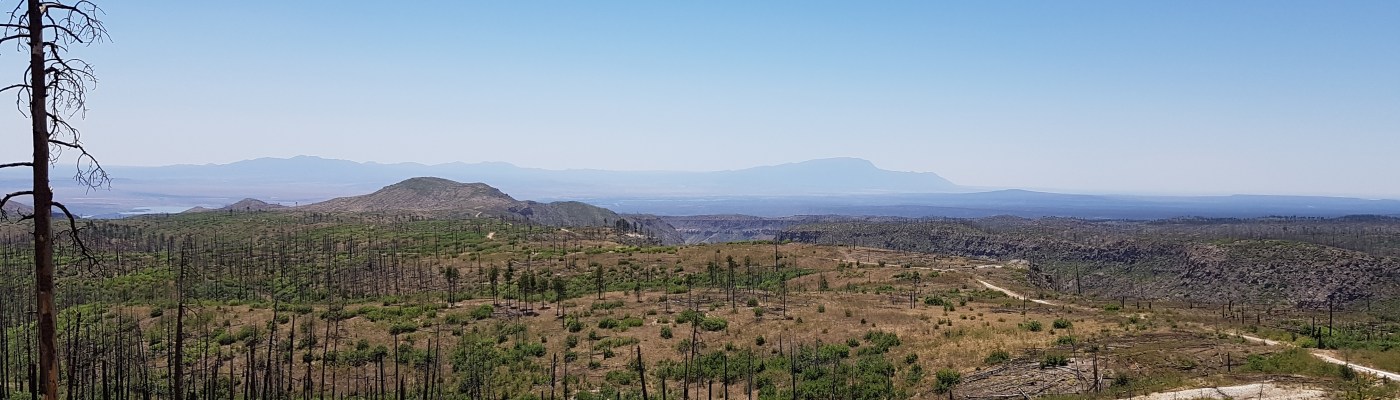
In southwestern US forests, the combined impact of climate change and increased fuel loads due to more than a century of human-caused fire exclusion is leading to larger and more severe wildfires. Restoring frequent fire to dry conifer forests can mitigate high-severity fire risk, but the effects of these treatments on the vegetation composition and structure under projected climate change remain uncertain.
Our findings indicate that thinning and prescribed burning can enhance tree species diversity in dry conifer forests by protecting old cohorts from stand-replacing fires. Moreover, our results suggest that treatments mainly implemented in dry pine forests with high risk of high-severity fires can be beneficial for subalpine species conservation by reducing the chance that high-severity fire at mid-elevation is transmitted into high-elevation forest.
 Cécile C. REMY